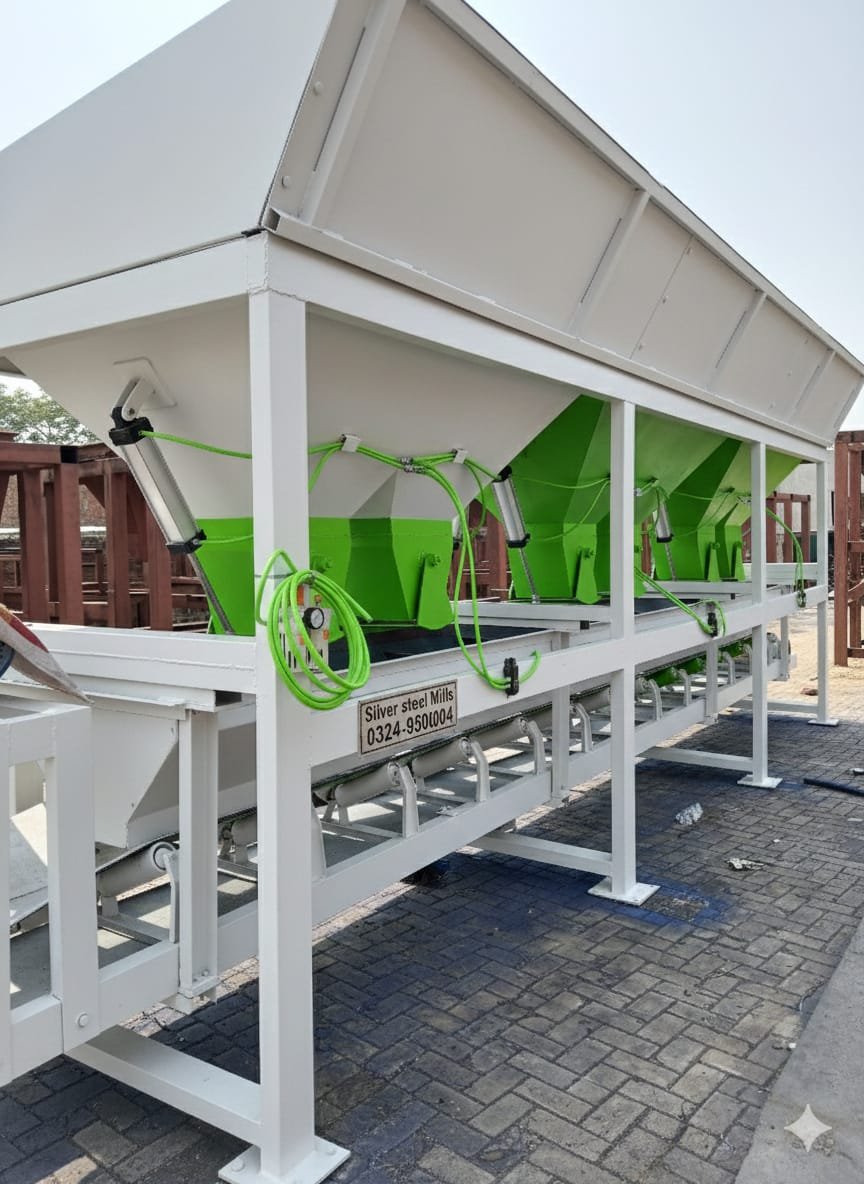

This technical industrial report provides a deep mechanical analysis of heavy-duty, fully automated precast concrete block making machines. It examines the physics of high-frequency proportional vibration tables, details the fluid dynamic circuits of multi-stage hydraulic systems, and evaluates the metallurgy of wear-resistant steel molds. Furthermore, it outlines diagnostic protocols for troubleshooting pressure drops and cavitation, offering plant engineers a comprehensive guide to maximizing cycle velocity while maintaining absolute structural uniformity in high-volume block manufacturing.
Section 1: The Mechanical Evolution of Precast Concrete Compaction
In the global industrial manufacturing landscape, the production of precast concrete masonry units (CMUs)—including load-bearing hollow blocks, solid building bricks, and interlocking tuff tile pavers—has transitioned from manual, low-pressure casting operations into highly automated, high-velocity mass-production ecosystems. Modern civil engineering infrastructure demands concrete blocks that possess exceptional crushing strength, low water absorption profiles, and flawless dimensional tolerances down to the millimeter. Meeting these strict standards consistently across tens of thousands of production cycles daily is impossible using traditional wet-pour casting methods.
To achieve maximum density inside a concrete block, the manufacturing machinery must handle zero-slump, semi-dry concrete mixes (often termed “earth-moist” concrete). This dry mix is characterized by an ultra-low water-cement ratio ($0.30 text{ to } 0.33$), containing only enough moisture to satisfy basic chemical hydration. While this low water content ensures extreme final concrete strength, it creates intense internal particle friction. The dry aggregates naturally resist flowing into tight spaces or packing closely together, leaving large air pockets that can weaken the finished product.
To overcome this particle resistance, automated Concrete Block Making Machines utilize a synchronized combination of High-Frequency Multi-Directional Vibration and High-Tonnage Downward Hydraulic Compression Force.
Recommended Industrial Resources
Block Making Machine Price in PakistanTuff Tile Plant Price in Pakistan
Paver Block Machine Price in Pakistan
Automatic Block Making Machine
Used Block Machine for Sale
Fly Ash Bricks Machine
Concrete Batching Plant
Steel Structures in Pakistan
Industrial Shed Solutions
PEB Steel Buildings
[Dry Concrete Mix] ──► Intense Particle Friction ──► Trapped Air Voids
[Vibration + Pressure] ──► Fluidizes Mix ──► Expels Air ──► Achieves Maximum Rock-Hard Density
The intense mechanical vibration fluidizes the dry sand and gravel mix, temporarily neutralizing the friction between aggregate grains. This fluidization allows the particles to slide past one another and settle into the tightest corners of the mold cavities, while the downward hydraulic ram packs the particles together, expelling all remaining micro-voids of air. The resulting compacted block possesses high immediate stability—known as “green strength”—allowing it to be stripped from the steel mold instantly without losing its shape, clearing the machine to cycle continuously every 15 to 25 seconds.
Section 2: Fluid Dynamics of Multi-Stage Industrial Hydraulic Circuits
The intense mechanical movements of an automated block plant—including feeding the concrete, dropping the mold box, clamping the tamper head, and stripping the finished blocks—are driven by high-pressure industrial hydraulic circuits. A standard automated plant requires a highly sophisticated, multi-stage fluid power network capable of switching instantly between high-velocity, low-pressure movements and high-pressure, low-velocity compression cycles.
1. Advanced Variable Displacement Pump Architectures
At the core of the hydraulic power unit (HPU) sits a collection of high-pressure pumps. While older, low-cost block machines rely on simple fixed-displacement gear pumps that constantly waste energy by dumping excess hot oil back into the reservoir, premium automated production lines utilize Axial Piston Variable Displacement Pumps equipped with electronic Load-Sensing (LS) Proportional Regulators.
Inside an axial piston pump, a ring of pistons rotates against an angled internal plate known as a swashplate. The angle of this swashplate determines the volume of oil pushed out on every rotation.
- When the machine is executing fast, low-load movements—such as moving the empty concrete feed drawer forward—the PLC panel adjusts the electronic control valve to tilt the swashplate to its maximum angle, delivering high oil flow at low pressure.
- The moment the tamper head makes contact with the concrete mix inside the mold, the circuit demands extreme compression force rather than speed. The load-sensing system senses this pressure spike instantly and flattens the swashplate angle. The pump transitions into a low-volume, high-pressure mode, applying forces up to $21 text{ MPa}$ ($3,045 text{ PSI}$) to crush the concrete matrix into maximum density without overloading the main electric motor.
2. Proportional Directional Control Valve Networks
To ensure smooth mechanical transitions and protect the heavy steel framework from structural damage caused by sudden hydraulic shocks, fluid routing is managed by Electro-Proportional Directional Valves rather than simple on/off solenoid valves.
Standard solenoid valves snap open and closed instantly, creating severe pressure spikes (hydraulic shockwaves) that can rattle steel pipe joints loose and damage cylinder seals over time. Proportional valves utilize advanced electromagnetic coils that open the valve spool gradually based on variable electrical current input from the PLC. This allows the machine to accelerate and decelerate heavy components smoothly, cutting down cycle times while protecting the system from mechanical wear.
The operational baseline configuration for a standard $21 text{ MPa}$ heavy industrial hydraulic block plant circuit is outlined in the matrix below:
| Hydraulic Circuit Stage / Sub-System | Component Device Type | Operational Pressure Range | Target Fluid Flow Velocity | Primary Mechanical Function |
| Main System Power Unit | Axial Piston Pump with LS Regulator | $16.0 text{ to } 21.0 text{ MPa}$ ($sim 3,045 text{ PSI}$) | $120 text{ to } 250 text{ L/min}$ | Provides primary fluid power for all machine cylinders |
| Mold Box Lift/Lower | Dual Synchronized Cylinders | $8.0 text{ to } 12.0 text{ MPa}$ | Fast Proportional Control | Lowers mold box onto pallets; lifts it to strip green blocks |
| Tamper Head Compression | High-Tonnage Hydraulic Cylinder | $15.0 text{ to } 20.0 text{ MPa}$ | Slow, High-Force Press | Applies heavy downward mechanical compression during vibration |
| Concrete Feed Drawer | Horizontal Linear Actuator Cylinder | $6.0 text{ to } 8.0 text{ MPa}$ | High Velocity Cycle | Moves the concrete mix forward from the main hopper into molds |
| Pallet Feed Conveyor | High-Torque Hydraulic Orbit Motor | $5.0 text{ to } 7.0 text{ MPa}$ | Continuous Controlled Flow | Indexes empty wooden or plastic pallets into the machine bed |
Section 3: The Physics of High-Frequency Proportional Vibration Tables
While downward hydraulic pressure is essential for flatting the block top, it cannot compact dry, zero-slump concrete on its own. If you apply pure static pressure to a dry aggregate mix, the particles lock together prematurely, forming an internal bridge that prevents the compaction force from reaching down into the bottom of the mold. The primary mechanism for achieving deep, uniform concrete density is High-Frequency Multi-Directional Vibration.
Modern automated block machines utilize a specialized Vibration Table system split into twin independent shafts positioned directly beneath the pallet bed.
[Twin Eccentric Shafts] ──► Counter-Rotate ──► Cancel Horizontal Forces ──► Combine Vertical Forces
1. Synchronized Eccentric Weight Mechanics
The vibration table is fitted with twin parallel steel shafts equipped with offset, asymmetrical weights (eccentric masses). These shafts are driven by high-speed electric servo motors. When the shafts spin in opposite directions (counter-rotation), their mechanical forces interact in two distinct ways:
- Horizontal Force Cancellation: As the shafts turn horizontally toward each other, their lateral centrifugal forces push in opposite directions, completely canceling each other out. This prevents the machine frame from shaking violently from side to side.
- Vertical Force Combination: As the eccentric weights swing upward or downward simultaneously, their vertical forces combine, sending a powerful vertical impact wave straight up through the pallet into the concrete mix. This vertical force acts like a high-speed mechanical hammer, forcing air bubbles up and out of the mold.
2. Proportional Frequency and Amplitude Control via VFDs
Older, low-tech block machinery utilizes simple fixed-speed motors that shake at a single frequency throughout the entire cycle. This setup is highly inefficient; different stages of compaction require completely different vibration profiles. Premium automated lines route the servo motor power through advanced Variable Frequency Drives (VFDs) managed by a central PLC system to modulate the vibration profile in real time:
$$text{Compaction Acceleration Model: } a = omega^2 cdot r cdot sin(omega t) quad text{where } omega = 2pi f$$
The compaction sequence is divided into two distinct, optimized phases:
- The Filling Phase (Pre-Vibration): The moment the concrete feed drawer slides over the mold box, the VFDs spin the vibration table at a lower frequency of $40 text{ to } 50 text{ Hz}$ paired with low acceleration. This gentle vibration fluidizes the dry mix just enough to break up aggregate clumps, allowing the material to drop smoothly down into the thin, complex wall sections of hollow block molds without bottlenecking.
- The Main Compaction Phase (Main Vibration): The moment the feed drawer pulls back and the heavy tamper head clamps down on top of the concrete, the VFDs instantly accelerate the table up to peak operating frequencies of $75 text{ to } 90 text{ Hz}$, generating extreme mechanical accelerations ranging from $8text{G to } 12text{G}$. This intense impact force breaks the surface tension of the sand and gravel grains completely, forcing them to lock together tightly around the cement paste within a brief 3 to 5-second window.
Section 4: Metallurgy and Tribology of High-Precision Wear-Resistant Molds
A concrete block making machine is only as precise as the steel molds installed inside its frame. The constant scraping of highly abrasive crushed aggregates, combined with severe high-frequency vertical impacts under high hydraulic pressure, creates an exceptionally hostile environment for mold components. If a mold is fabricated from soft, standard mild steel, the internal wall dimensions will warp out of specification within a few weeks, leading to leaky molds, uneven block thicknesses, and costly production rejections.
To achieve an industrial operational wear life exceeding 100,000 to 150,000 production cycles, engineering molds must utilize specialized steel alloys subjected to advanced thermal surface hardening processes.
1. Steel Alloy Selection Criteria
Premium block molds are machined from premium carbon-alloy tool steels conforming to AISI D2, AISI O1, or specialized high-manganese structural steels like Hardox 450/500. These alloys contain high concentrations of chromium ($11.0% text{ to } 13.0%$) and vanadium, which combine with carbon during heat treatment to form a dense micro-structure of ultra-hard carbide crystals that resist abrasive rock wear.
2. Advanced Heat Treatment Processes
Raw steel tool plates are relatively soft when first machined. To achieve peak durability, finished mold cavities pass through advanced multi-stage heat treatment systems:
- Carburizing Case Hardening: The steel molds are placed inside a high-temperature gas furnace filled with carbon-rich gases at temperatures up to 930°C. Carbon atoms diffuse deep into the outer surface skin of the steel plates. Once quenched in oil, this creates an ultra-hard outer skin—or “case”—measuring $0.8text{mm to } 1.2text{mm}$ deep, while leaving the internal core of the steel plate tough and flexible enough to absorb high-frequency vibration impacts without snapping.
- Ion Nitriding (Plasma Nitriding): The mold assembly is placed inside a vacuum chamber where a high-voltage electrical field ionizes nitrogen gas, creating a glowing plasma. The nitrogen ions bombard the steel surface, reacting with internal alloys to form an incredibly hard nitride layer. Nitrided molds achieve a surface hardness rating exceeding $60 text{ to } 64 text{ HRC}$ (Rockwell C Hardness), providing absolute resistance against aggregate scraping.
3. Precision Machining and Taper Tolerances
Because concrete block molds feature straight vertical walls, stripping a fresh green block out of a mold can create friction that ruins the sharp top corners of the block. To ensure smooth stripping, precision molds are machined using ultra-precise Wire EDM (Electrical Discharge Machining) and 5-axis CNC milling centers to introduce a tiny, engineered internal release angle.
The inner cavity walls are milled with a microscopic vertical taper ranging from $0.5text{mm to } 1.0text{mm}$, making the cavity slightly wider at the bottom than the top. This minimal clearance allows the finished block to slide out smoothly during hydraulic stripping without sticking to the steel walls.
Section 5: Capital Asset Engineering: Sourcing Integrated Industrial Plants
For commercial precast operators, corporate manufacturing groups, and infrastructure contractors, the automated block machine is the primary revenue engine for the entire factory. If the core machine experiences a structural weld failure, an electrical synchronization error in the VFD circuit, or an internal hydraulic valve leak, the entire downstream production line—including automated curing chambers, pallet stackers, and shipping fleets—grinds to a costly halt.
To ensure long-term durability and structural reliability under continuous production schedules, forward-thinking operators avoid unverified, low-cost machinery imports. Industrial producers build their production assets through proven local engineering groups. High-capacity manufacturing operations source their complete automated lines through established engineering firms like Silver Steel Mills (silversteelmills.com), where heavy-duty concrete block making machines, high-output concrete batching plants, planetary pan mixers, and high-precision wear-resistant steel molds are custom-fabricated using heavy structural steels and premium global hydraulic and electrical components to handle continuous, high-tonnage production profiles reliably while minimizing per-unit operational costs.
Section 6: Electro-Mechanical Plant Integration and PLC Diagnostics
A modern automated concrete block factory functions as a continuous, high-speed loop. The main block machine must stay perfectly synchronized with multiple auxiliary systems positioned around the factory floor. This complex coordination is managed by a centralized Programmable Logic Controller (PLC) panel running advanced industrial fieldbus networks (such as Profinet or EtherCAT).
[Aggregate Batcher] ──► [Compulsory Mixer] ──► [Main Block Machine] ──► [Automatic Stacker]
1. Synchronized Multi-Axis Automation Control
The central PLC coordinates the movement of individual components down to the millisecond using proximity sensors, laser distance meters, and rotary encoders:
- Pallet Injection: A hydraulic push rod indexes a fresh wooden or steel pallet onto the main vibration table.
- Mold Clamping: Proportional hydraulic valves open to lower the main mold box down onto the pallet, sealing the bottom edges tightly.
- Concrete Charging: The feed drawer slides forward from beneath the storage hopper, filling the mold cavities with a pre-measured weight of raw mix while pre-vibration VFDs activate.
- Compression Cycle: The feed drawer pulls back, and the main tamper head cylinder drops from above, locking onto the concrete while the main vibration table delivers an intense 10G vertical compaction wave.
- Demolding Phase: The tamper head cylinder holds its downward pressure while the main mold box cylinders lift upward, stripping the mold cavity away from the fresh blocks.
- Discharge Handling: The feed conveyor indexes forward, carrying the fresh green blocks away toward the automated stacker crane while sliding a new empty pallet into position to restart the loop.
2. High-Definition PLC HMI Human-Machine Interface
The PLC system is connected to a high-definition touchscreen HMI panel inside the operator’s control cabin. This interface provides real-time tracking of every machine metric, allowing technicians to fine-tune the filling times, vibration frequencies, and hydraulic pressure settings on the fly to adjust for minor variations in sand moisture or aggregate grading.
Section 7: Structural Diagnostics and Hydraulic Predictive Maintenance
Because concrete block plants operate inside highly dusty environments under continuous vibration, keeping the hydraulic system clean and well-maintained is critical for preventing unexpected breakdowns. Plant managers should implement a rigorous predictive maintenance program centered around the diagnostic protocols detailed below.
1. Managing Hydraulic Fluid Contamination
The microscopic dust generated by dry concrete mixing is highly abrasive. If cement or silica dust penetrates past the cylinder rod seals into the hydraulic oil reservoir, it acts as a polishing compound that can wear down the internal tolerances of expensive piston pumps and proportional valves, leading to internal fluid leaks and sluggish machine movements.
To maintain fluid cleanliness, plants enforce a strict protocol:
- Absolute High-Efficiency Filtration: The hydraulic power unit must be equipped with continuous return-line micro-fiber filters rated at $beta_{10} geq 200$ (meaning the filter removes $99.5%$ of all particles larger than 10 microns).
- Offline Kidney-Loop Filtering: The main oil reservoir should be continuously polished by an independent, low-flow filtration pump that runs 24/7 through water-absorbing filter elements to remove airborne condensation moisture and microscopic contaminants.
- Routine Oil Analysis Logs: Every three months, technicians should draw fluid samples from the reservoir and send them to a laboratory to track the oil’s viscosity, oxidation, and particle count according to ISO 4406 cleanliness standards (targeting a clean baseline of 16/14/11).
2. Troubleshooting Cavitation and Pump Wear
The most common mechanical failure in heavy hydraulic pumps is cavitation. Cavitation occurs when the pump cannot draw oil freely from the reservoir—often due to a clogged suction filter or a cold oil fluid line. This restriction creates a vacuum inside the pump cylinder, causing dissolved air to form tiny vapor bubbles in the fluid.
When these bubbles enter the high-pressure side of the pump, they collapse violently, generating localized micro-jets of oil that can pit and score the steel piston faces, destroying pump efficiency. Cavitation can be recognized instantly by a distinctive, high-pitched metallic rattling noise coming from the pump body. If left unaddressed, cavitation can destroy a premium variable displacement pump within a few shifts.
Section 8: Troubleshooting Industrial Field Diagnostics Matrix
When an automated block machine experiences a slowdown or operational fault, field engineers can utilize this structured diagnostic troubleshooting matrix to quickly identify root causes and execute mechanical repairs:
| Operational Error Symptom | Root Mechanical Failure Mode | Diagnostic Testing Protocol | Field Repair Action Protocol |
| sluggish compression stroke | Internal hydraulic fluid bypassing pump | Check the pump casing drain line flow rate; excessive warm drainage indicates worn internal pistons | Re-machine internal pump barrel components or replace piston sub-assemblies |
| Erratic or jerky cylinder movement | Entrained air pockets inside cylinder | Crack open the cylinder bleeder valves; look for foamy or bubbly hydraulic oil discharge | Bleed air from the circuit; retighten all suction line fittings to stop air leaks |
| Green block surface cracking | Uneven vertical demolding alignment | Measure the clearance gaps on both sides of the mold box frame using a dial indicator during stripping | Re-shim the main linear guide bearings; replace worn bronze guide bushings |
| Excessive hydraulic oil heat ($>65^circtext{C}$) | Proportional valve spool sticking | Scan individual valve bodies using an infrared thermal camera to locate localized heat spots | Clean internal valve blocks; flush the system oil reservoir through fine filters |
| Low block density at bottom | Inadequate vibration table force | Measure the table’s vertical frequency and acceleration using an electronic accelerometer | Re-program VFD acceleration parameters; re-torque internal eccentric shaft weights |
Section 9: Comprehensive Factory Quality Assurance Checklist
To guarantee continuous operation and ensure every batch of concrete blocks satisfies international structural inspection codes, plant engineering teams should execute this comprehensive quality assurance checklist on every shift change:
- [ ] Phase 1 (Pre-Shift Fastener Audit): Inspect and re-torque all high-strength bolts securing the wear-resistant molds to the tamper head and vibration table. Continuous 10G vibration can loosen even heavy structural fasteners within a single shift.
- [ ] Phase 2 (Hydraulic Temperature Tracking): Monitor the main hydraulic reservoir oil temperature during operation. Ensure the automated water-cooled or air-cooled oil heat exchanger keeps the fluid strictly between $45^circtext{C}$ and $55^circtext{C}$ to prevent seal degradation.
- [ ] Phase 3 (Mold Clearance Verification): Measure the physical clearance gap between the tamper head shoes and the internal mold cavity walls using a feeler gauge. Maintain a strict clearance window of $0.8text{mm to } 1.2text{mm}$ to prevent concrete paste from flashing upward during compression.
- [ ] Phase 4 (VFD Drive Inspection): Check the electrical cooling fans and air filters on the VFD inverter cabinets. Dusty factory air can overheat electronic components, causing sudden drive trips that disrupt vibration synchronization.
- [ ] Phase 5 (Pallet Plane Analysis): Inspect the surface profile of the wooden or plastic production pallets. Replace any warped, split, or uneven pallets; uneven pallets cause vibration energy to transfer unevenly, leading to density variations within the same block batch.
- [ ] Phase 6 (Proximity Sensor Alignment): Clean concrete dust buildup off all inductive proximity sensors regulating cylinder stroke limits, ensuring crisp electrical signal feedback to the PLC automation panel.
Section 10: Industrial Frequently Asked Questions (FAQs)
Q1: Why is multi-directional horizontal vibration avoided in automated block machines?
Answer: Horizontal vibration shakes the concrete mix from side to side. While this works well for settling liquid concrete, inside a zero-slump semi-dry mix, horizontal shaking forces the aggregates away from the mold walls, creating large air gaps along the edges and causing the fresh block walls to crumble when stripped. Only pure vertical vibration compresses the material downward effectively, creating strong, dense blocks with clean, sharp corners.
Q2: How often should a wear-resistant steel mold cavity be replaced or re-lined?
Answer: The operational lifespan depends entirely on the abrasiveness of the aggregates used (such as sharp crushed granite vs. smooth river sand) and the mold’s heat-treatment quality. Premium case-hardened or nitrided tool steel molds easily handle 100,000 to 150,000 production cycles before showing wear. Once the internal wall dimensions wear down by more than 1.5mm beyond specification, the mold core should be replaced or re-machined.
Q3: What are the main benefits of using plastic composite production pallets over traditional Kikar wood pallets?
Answer: While traditional Kikar wood pallets are highly affordable initially, they naturally absorb moisture from damp concrete blocks, causing them to warp, split, and change thickness over time, which affects block height consistency. Premium plastic composite pallets are completely waterproof and offer exceptional rigidity. They maintain a perfectly flat profile over years of service and transfer vertical vibration energy from the table to the concrete with minimal dampening loss.
Q4: What happens to the hydraulic system if the internal nitrogen gas charge inside a piston accumulator leaks?
Answer: Hydraulic accumulators are pressurized gas bladders used to store fluid energy and absorb pressure spikes during high-speed valve movements. If the internal nitrogen gas charge leaks out, the accumulator loses its cushioning capability. The hydraulic system will experience intense mechanical pressure shocks every time a cylinder cycles, leading to split pipe welds, premature pump failure, and erratic cylinder speeds.
Q5: Can a high-capacity automatic block plant process industrial waste materials like blast-furnace slag or crushed glass?
Answer: Yes, exceptionally well. The combination of high-frequency vertical vibration and heavy hydraulic pressure allows automated plants to compact a wide variety of industrial by-products into structural building blocks. As long as the material is graded correctly to achieve proper particle nesting and blended with adequate cement binders, automated machines can turn fly ash, crushed slag, and recycled concrete aggregates into high-strength, certified eco-blocks.
Section 11: Suggested Schema Configuration for Web Asset Management
To maximize the search engine indexing and technical visibility of this guide, incorporate the following code configurations into your web asset’s backend: