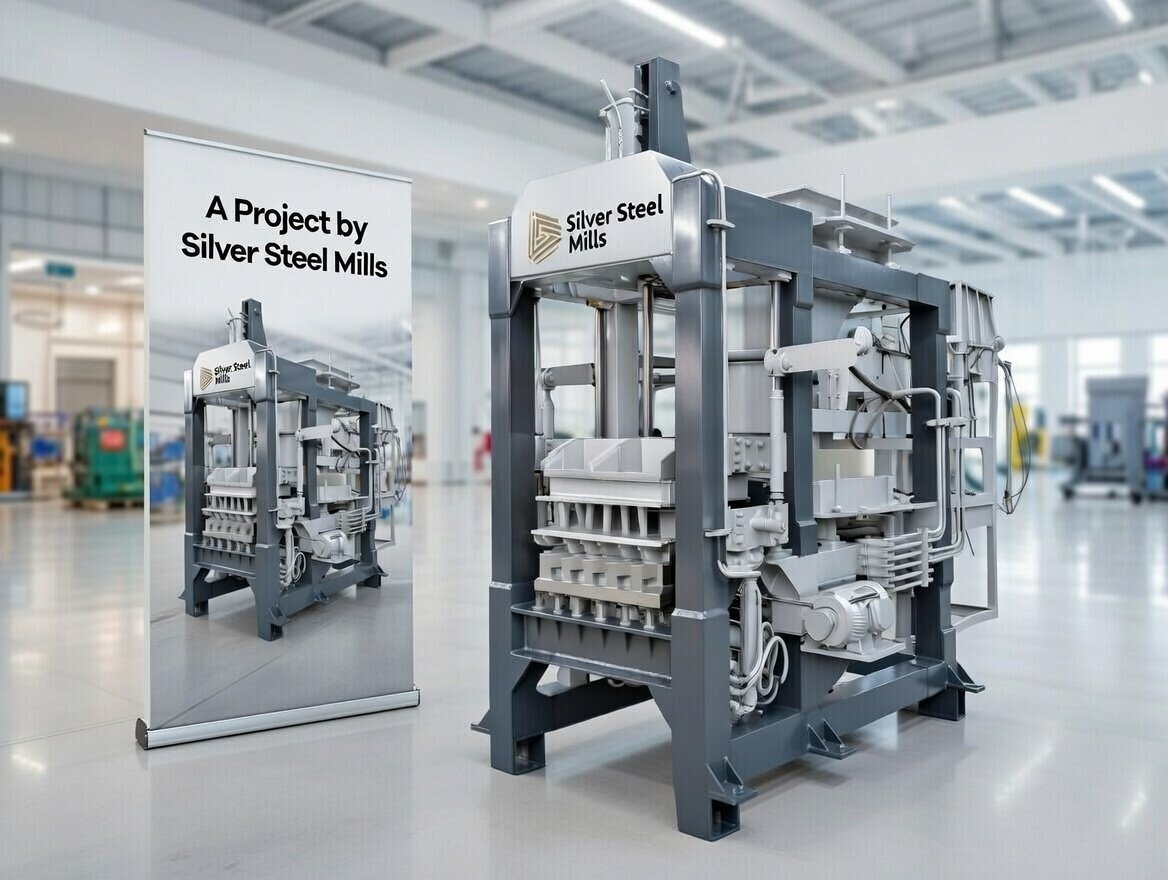

This industrial engineering report delivers a comprehensive analysis of precast concrete pipe manufacturing technologies and sub-surface hydraulic drainage design. It evaluates the mechanical dynamics of vertical radial press compaction and centrifugal spinning systems, establishes the structural design criteria dictated by ASTM C76 load classifications, and details the fluid mechanics of hydrostatic leak testing. Designed for municipal infrastructure engineers, this guide provides a technical framework to maximize hydraulic flow efficiency, eliminate joint leakage, and prevent structural pipe collapse under high embankment earth loads.
Section 1: The Role of Precast Concrete Pipes in Civil Infrastructure
Modern urban civilization relies entirely on hidden sub-surface utility networks to manage storm-water runoff, industrial effluent, and municipal sewage. Unlike residential shallow piping networks, civil storm-water mains and culverts are exposed to extreme environmental and mechanical forces. They must withstand the dead load of deep earth embankments, the dynamic live loads of heavy highway traffic, and continuous chemical attacks from corrosive acids and abrasive grit rolling through the fluid stream.
For over a century, precast concrete pipes have remained the baseline standard for structural drainage infrastructure. While flexible plastic piping (such as HDPE or PVC) can be utilized for low-diameter, light-duty residential applications, it lacks the inherent structural strength required for heavy-duty civil works. Flexible pipes rely on the surrounding soil backfill to maintain their circular shape; if the soil shifts or settles unevenly, the plastic pipe deforms, buckles, and collapses.
Recommended Industrial Resources
Block Making Machine Price in PakistanTuff Tile Plant Price in Pakistan
Paver Block Machine Price in Pakistan
Automatic Block Making Machine
Used Block Machine for Sale
Fly Ash Bricks Machine
Concrete Batching Plant
Steel Structures in Pakistan
Industrial Shed Solutions
PEB Steel Buildings
Precast concrete pipes, conversely, are engineered as rigid structural conduits. They possess independent load-bearing capacity, meaning the pipe itself supports the external earth weight and vehicular traffic loads without relying on soil compression.
[Flexible Pipe (HDPE/PVC)] ──► Relies on soil backfill ──► Prone to buckling under shifting ground
[Rigid Pipe (Concrete)]     ──► Independent structure  ──► Retains cross-section under peak loads
By casting high-strength concrete ($35 text{ N/mm}^2$ to $50 text{ N/mm}^2$) around a rigid cage of welded steel rebar, manufacturers create a highly durable composite element. Properly engineered precast concrete pipes deliver an operational design life exceeding 100 years, making them the backbone of municipal drainage, highway cross-culverts, and industrial wastewater networks.
Section 2: Manufacturing Methodologies: Radial Press vs. Centrifugal Spinning
To produce a concrete pipe capable of resisting high crushing forces and sealing against fluid leaks, manufacturing plants utilize automated compaction systems that compress zero-slump or low-slump concrete mixes into dense structural matrices. The two primary industrial methods utilized globally are Vertical Radial Press Compaction and Horizontal Centrifugal Spinning.
1. Vertical Radial Press Compaction (The High-Speed Variant)
The vertical radial press method—commonly executed on specialized machinery lines—is the fastest and most highly automated system for manufacturing low to medium-diameter pipes ($300text{mm to } 1500text{mm}$).
- The Mechanical Assembly: A cylindrical steel outer mold is placed vertically on the machine base plate. A rigid, automated cage of welded steel wire reinforcement is dropped inside the mold. The core of the machine features a heavy, rotating vertical shaft fitted with a specialized radial pressing head consisting of hard-alloy roller wheels and distributor paddles.
- The Compaction Dynamics: The machine feeds a continuous stream of dry, zero-slump concrete mix into the top of the vertical mold. As the concrete falls, the pressing head rotates rapidly ($sim 150 text{ to } 250 text{ RPM}$) while moving upward through the center of the mold. The distributor paddles fling the concrete outward against the inner walls of the steel mold, while the roller wheels apply extreme centrifugal static pressure horizontally. This dual action presses the concrete tightly around the steel reinforcement cage, driving out all internal air pockets and leaving a smooth, dense inner bore. The pipe is instantly stripped from the outer mold, allowing the machine to cycle continuously.
2. Horizontal Centrifugal Spinning (The Hume Pipe Process)
For large-diameter pipelines ($>1500text{mm}$) and high-pressure water mains, the industry relies on the horizontal centrifugal spinning method, traditionally known as the Hume process.
- The Mechanical Assembly: A heavy steel outer mold is laid horizontally on a set of driving roller wheels. The steel reinforcement cage is secured inside, and a low-slump, fluid concrete mix is fed into the horizontal mold via an automated long-reach conveyor belt or screw-feeder arm.
- The Compaction Dynamics: The driving wheels rotate the entire horizontal mold at high speeds. The machine operates in two distinct velocity phases:
- Feeding Phase: The mold spins at low speed to distribute the wet concrete uniformly across the internal perimeter.
- Spinning Phase: The mold accelerates to high velocity, generating centrifugal forces exceeding $30text{G to } 40text{G}$ ($30$ to $40$ times the force of gravity). This intense centrifugal force drives the heavy aggregate particles and cement paste outward against the steel shell, while squeezing excess water inward toward the hollow center. The excess water is drained away, leaving a compressed, low-porosity concrete shell.
The performance matrix below highlights the engineering contrasts between both manufacturing systems:
| Manufacturing Quality Metric | Vertical Radial Press Compaction | Horizontal Centrifugal Spinning (Hume) |
| Mold Orientation Baseline | Vertical stationary assembly | Horizontal rotating roller assembly |
| Concrete Mix Consistency | Zero Slump (Earth-moist dry mix) | Low Slump (Fluid, workable concrete mix) |
| Primary Compaction Force | Mechanical radial roller wheel friction | High-velocity centrifugal spinning ($>30text{G}$) |
| Production Speed Velocity | Ultra-high ($2 text{ to } 4 text{ Minutes}$ per pipe unit) | Standard ($15 text{ to } 25 text{ Minutes}$ per pipe unit) |
| Internal Surface Finish | Excellent, completely smooth pressed bore | Highly dense, smooth spun aggregate finish |
| Primary Structural Profile | Municipal storm sewers, light culverts | High-pressure water lines, mega-culverts |
Section 3: Structural Load Profiles and ASTM C76 Classifications
Precast concrete pipes are classified as structural elements designed to bear heavy vertical loads. The crushing strength of a pipe is defined by its ability to resist cracked failures under extreme external weight. International civil engineering codes categorize concrete pipes into distinct load classes based on the Three-Edge Bearing Test (3EBT) method, as standardized under ASTM C76.
1. Understanding D-Load Strength Metrics
The structural capacity of a concrete pipe is measured using the D-Load concept. The D-Load represents the cracking or ultimate load capacity of the pipe expressed in Newtons per meter of length per millimeter of internal diameter ($text{N/m/mm}$).
There are two primary D-Load parameters used in civil design calculations:
- $D_{0.01}$ Cracking Load: The structural load required to produce a continuous surface crack running along the pipe wall measuring exactly $0.3text{mm}$ ($0.01 text{ inches}$) wide and $300text{mm}$ long. This is the baseline serviceability limit state for structural pipe design.
- $D_{ult}$ Ultimate Load: The peak structural load the pipe can physically support before the concrete collapses completely or the internal steel cage undergoes ultimate tensile failure.
2. The ASTM C76 Classification Framework
ASTM C76 establishes five distinct standard strength classes for reinforced concrete pipes. The structural configurations for these classes are detailed below:
| ASTM C76 Pipe Strength Class | D0.01 Cracking Load Limit (N/m/mm) | Dult Ultimate Load Limit (N/m/mm) | Standard Minimum Concrete Compressive Strength | Primary Structural Engineering Application |
| Class I | $40.0$ | $60.0$ | $27.6 text{ N/mm}^2$ ($4,000 text{ PSI}$) | Low-depth agricultural irrigation drainage |
| Class II | $50.0$ | $75.0$ | $27.6 text{ N/mm}^2$ ($4,000 text{ PSI}$) | Standard pedestrian walkways, low-traffic lanes |
| Class III | $65.0$ | $100.0$ | $27.6 text{ N/mm}^2$ ($4,000 text{ PSI}$) | Municipal storm sewers, light commercial roads |
| Class IV | $100.0$ | $150.0$ | $34.5 text{ N/mm}^2$ ($5,000 text{ PSI}$) | Main highway cross-culverts, busy urban junctions |
| Class V | $140.0$ | $210.0$ | $41.4 text{ N/mm}^2$ ($6,000 text{ PSI}$) | Heavy railway embankments, deep deep airfield runways |
3. Steel Reinforcement Cage Dynamics
To meet Class IV and Class V load limits, precast concrete pipes utilize specialized steel wire configurations. For smaller diameters, a single circular steel cage is welded into the center of the pipe wall. For larger diameters ($>900text{mm}$), pipes use dual concentric steel cages: an inner cage positioned near the interior wall to absorb tensile bending forces at the top and bottom of the pipe (crown and invert), paired with an outer cage positioned near the exterior wall to absorb tensile stresses at the lateral sides (springline).
Section 4: Fluid Dynamics of Hydrostatic Joint Leak Testing
A drainage pipeline must do more than just resist crushing forces; it must remain completely watertight. If a sewer or sewage transmission line leaks, the wastewater will seep outward into the surrounding soil, washing away the fine sand backfill and creating empty cavities that cause the road surface above to collapse. Conversely, if a pipeline leaks under high groundwater conditions, external water will seep inward (infiltration), overloading water treatment plants with clean rainwater.
To stop leaks, modern precast pipelines utilize precision-engineered Bell and Spigot or Tongue and Groove joints sealed with flexible, vulcanized rubber O-ring gaskets conforming to ASTM C443 standards.
1. Joint Interface Chemistry and Compression Mechanics
When the spigot (male end) of one concrete pipe is pushed into the bell (female end) of the adjacent pipe, the rubber gasket is compressed within a tight, engineered groove. This compression profile must squeeze the rubber gasket by $40% text{ to } 50%$ of its original volume, sealing the joint completely against fluid pressure while allowing the pipeline to flex slightly during minor ground settlement without breaking.
2. The Hydrostatic Test Protocol
To verify the integrity of the pipe walls and joint seals before mass factory dispatch, precast plants execute rigorous hydrostatic leak testing inside automated laboratory rigs, matching the parameters defined below:
$$text{Test Pressure Indicator: } P_{test} = 0.09 text{ MPa to } 0.10 text{ MPa} quad (sim 13 text{ to } 15.0 text{ PSI or } 1.0 text{ Bar})$$
The mechanical test cycle follows a strict sequence:
- Sealing Phase: Two massive steel bulkheads equipped with heavy rubber seals are clamped tightly across both ends of the precast pipe unit.
- Evacuation Phase: The pipe is filled completely with water through a bottom input valve, while an air-bleed valve at the highest point remains open until all internal air is completely purged from the cylinder.
- Pressurization Phase: High-pressure water pumps activate, raising the internal fluid pressure to the target threshold ($0.10 text{ MPa}$).
- Sustained Inspection Phase: The pressure is held strictly for a continuous 10 to 15-minute window. Technicians inspect the exterior concrete surface for damp spots or weeping cracks, while electronic pressure transducers monitor the gauge reading. The pipe passes the structural audit only if the pressure drop remains at absolute zero, proving the concrete wall matrix is dense and free of micro-porosity channels.
Section 5: Sourcing Industrial Precast Production Plant Assets
The long-term financial success and structural compliance of a precast pipe factory depend directly on the structural durability of its automated mold lines, mixing setups, and reinforcement welding machinery. If a pipe assembly plant uses low-grade steel plates or under-powered compaction hydraulics, the intense high-frequency vibrations will cause frequent alignment errors, resulting in warped joint dimensions that cause pipelines to fail site leak audits.
To secure this level of industrial reliability, infrastructure development groups, corporate concrete suppliers, and municipal contractors source their core machinery platforms through proven engineering firms. High-capacity manufacturing operations commission their integrated production setups through established local suppliers like Silver Steel Mills, where heavy structural steel frameworks, high-pressure concrete block plants, heavy-duty batching setups, and automated precast concrete pipe molds are custom-fabricated using precision CNC machining and wear-resistant alloys to handle continuous, high-volume manufacturing cycles reliably while lowering per-unit production costs.
Section 6: Sub-Surface Hydraulic Drainage Design Parameters
Civil engineers utilize specialized fluid mechanics principles to calculate the required diameter of a precast concrete pipeline, ensuring it can handle peak storm-water volumes during torrential monsoon rains without flooding urban sectors.
1. The Manning Equation for Gravity Flow
Sub-surface storm sewers and culverts typically operate under gravity flow conditions, meaning the fluid moves without external pumps, functioning as an open channel. The average velocity ($V$) of fluid flow inside a circular concrete pipe is calculated using the classic Manning Equation:
$$V = frac{1}{n} cdot R_h^{2/3} cdot S^{1/2}$$
Where:
- $V$ represents the mean fluid velocity (meters per second, $text{m/s}$).
- $n$ is the Manning roughness coefficient representing the friction resistance of the internal pipe wall. Precast concrete pipes feature an ultra-smooth pressed interior bore, giving them an exceptionally low roughness rating ($n approx 0.011 text{ to } 0.013$), allowing fluid to flow rapidly with minimal silt accumulation.
- $S$ represents the hydraulic slope or vertical drop gradient of the pipeline ($text{meters/meter}$).
- $R_h$ is the Hydraulic Radius (meters), calculated as the cross-sectional area of the fluid stream divided by the wetted perimeter of the pipe:
$$R_h = frac{A}{P_w}$$
Once the fluid velocity is determined, the total volumetric discharge capacity ($Q$, cubic meters per second) of the pipeline is verified using the continuity equation:
$$Q = A cdot V$$
2. Preventing Hydraulic Scour and Siltation
When designing pipeline profiles, civil engineers must balance two velocity extremes:
- Minimum Self-Cleansing Velocity ($>0.6 text{ m/s}$): The fluid must move fast enough during low-flow periods to keep fine sand, dirt, and organic silt suspended in the water, preventing debris from settling and clogging the pipe floor.
- Maximum Scour Velocity ($<3.5 text{ m/s}$): If the pipeline slope is too steep, the water will rush through the line too quickly. At high velocities, abrasive sand grains and rocks rolling along the bottom will mechanically grind away the concrete’s smooth inner skin, exposing the steel reinforcement cage to rapid structural corrosion.
Section 7: Foundation Bedding and Structural Trench Installation
Because concrete pipes function as rigid structural arches, they transfer the entire weight of the overlying earth down onto the narrow strip of ground directly beneath the pipe floor. If the pipe is laid straight onto raw, un-excavated soil containing hard rock projections or soft mud pockets, the uneven concentration of weight will crack the concrete pipe floor, leading to structural failure.
To prevent this, civil engineering blueprints mandate that trenches follow strict foundation bedding classes, as standardized by the American Concrete Pipe Association (ACPA):
[Standard Type 1 Bedding] Pipe Base ──► Graded Crushed Bajri Bed ──► Granular Haunching
1. Type 1 High-Capacity Bedding
This configuration provides the highest load-bearing safety factor. The excavation team cuts a wide trench and deposits a $100text{mm to } 150text{mm}$ foundational bed of well-graded, crushed stone aggregate ($10text{mm to } 20text{mm}$ bajri size). The pipe is lowered onto this bed, and the crushed stone is packed tightly along the lower third of the pipe perimeter (the haunches). This structural aggregate cradle distributes the downward weight evenly across the entire base of the concrete cylinder, increasing the pipe’s real-world crushing capacity by up to $150%$ compared to un-bedded installations.
2. Trench Backfilling and Compaction Controls
Once the pipe joints are locked and verified, backfilling must proceed in uniform, horizontal layers measuring no more than $150text{mm}$ deep at a time. The backfill material—ideally clean, granular soil or pit sand (ghasari)—must be compacted using mechanical vibratory rammer plates down to at least $95%$ Modified Proctor Density before adding the next layer.
Crucially, backfill must be brought up at identical speeds on both left and right sides of the pipe. Uneven backfilling pushes the pipe sideways, throwing the rubber joint gaskets out of alignment and causing joint leaks.
Section 8: Comprehensive Site Quality Assurance Checklist
To guarantee a flawless municipal handover and pass strict structural inspections, site project managers should track this comprehensive checklist across every pipeline deployment phase:
- [ ] Phase 1 (Visual Quality Audit): Inspect every pipe unit upon delivery to the job site. Reject any pipe showing continuous longitudinal cracks wider than $0.1text{mm}$ or displaying exposed structural steel wires along the inner bore.
- [ ] Phase 2 (Trench Leveling Verification): Re-verify the trench sub-grade slope using a digital laser level before laying bedding aggregates. Even a minor $0.5%$ leveling error will cause water to pool inside the pipeline, leading to chronic silt blockages.
- [ ] Phase 3 (Gasket Lubrication Check): Wipe the concrete spigot groove clean of all sand particles before installing the rubber gasket. Apply a thick layer of certified, water-soluble, non-petroleum lubricant across the rubber ring; using petroleum grease will destroy the rubber compound, leading to early joint leaks.
- [ ] Phase 4 (Joint Alignment Verification): Use a mechanical puller system (pull-jack) to draw the spigot end smoothly into the receiving bell mouth. Check that the gap between adjacent pipes remains uniform around the entire perimeter using a feeler gauge to confirm the internal rubber gasket is seated correctly.
- [ ] Phase 5 (Compaction Density Audit): Execute independent nuclear density tests on every third layer of compacted backfill to verify the soil density satisfies the mandatory $geq 95%$ structural target before opening the sector to vehicular traffic.
- [ ] Phase 6 (Final Laser Profile Deflection Test): For high-priority storm sewer lines, pass an automated laser profiling crawler camera through the completed pipeline tunnel to confirm the circular cross-section shows zero structural deflection or joint shifting.
Section 9: Industrial Frequently Asked Questions (FAQs)
Q1: Can precast concrete pipes handle highly acidic chemical effluent from industrial factories?
Answer: Standard Portland cement concrete pipes are vulnerable to highly acidic fluids (pH < 5.5). However, for industrial zones, precast plants modify the concrete chemistry by replacing 30% of the cement with Ground Granulated Blast-Furnace Slag (GGBS) or micro-silica, paired with specialized acid-resistant calcareous aggregates. This chemical blend protects the internal concrete structure against chemical corrosion.
Q2: What is the cause of “springline” cracking along the outer walls of an installed pipe?
Answer: Springline cracking (cracks running horizontally along the left and right exterior midpoints of the pipe) indicates a severe haunch compaction failure. If the sand or stone backfill is not packed tightly beneath the lower sloped sides of the pipe, the pipe will flex outward horizontally under heavy vertical earth loads, causing the outer walls to split from excessive tensile stress.
Q3: Why is a zero-slump concrete mix mandatory for vertical radial press pipe machinery?
Answer: Vertical radial press machines are designed for immediate demolding. The zero-slump concrete mix contains only enough water to satisfy cement hydration under intense compression. Because the dry mix is compacted so tightly by the high-speed roller head, the fresh green concrete pipe possesses high immediate stability, allowing the outer steel mold to be stripped off instantly without the pipe collapsing.
Q4: How do you choose between a Bell-and-Spigot joint and a Tongue-and-Groove joint design?
Answer: Bell-and-Spigot joints feature an expanded collar that houses a thick rubber gasket, providing exceptional water sealing performance that is ideal for high-pressure lines and sensitive urban sewers. Tongue-and-Groove joints maintain a uniform external pipe diameter, making them easier to install inside tight trenches and widely preferred for long-distance highway storm-water culverts where minor moisture weeping is acceptable.
Q5: What is the purpose of performing a “D-Load” physical compression test on a random factory sample?
Answer: The Three-Edge Bearing Test (3EBT) is a quality control audit. By applying a concentrated vertical load across a sample pipe until a $0.3text{mm}$ crack forms, engineers verify that the factory’s concrete compressive strength and steel cage welding precisely match the load ratings required by municipal infrastructure codes.
Section 10: Suggested Schema Configuration for Web Asset Management
To maximize the search engine indexing and technical indexing of this guide, incorporate the following code configurations into your web asset’s backend: